Architects
(Except Landscape and Naval)

Minimal Risk
Low High

Explore safer careers (3)

Lower estimated automation risk

Architectural and Engineering Managers
11% automation risk | Minimal Risk
Pays better More jobs
7.1 pts lower View career
Why it fits

Builds on design leadership, technical review, client coordination, budgets, staffing, and delivery oversight.

Construction Managers
11% automation risk | Minimal Risk
Pays better Higher growth
7.5 pts lower View career
Why it fits

Uses drawings, specifications, codes, contractors, schedules, site constraints, and quality control.

Architecture Teachers, Postsecondary
9% automation risk | Minimal Risk
9.3 pts lower View career
Why it fits

Uses design studio critique, building systems, codes, drawing review, and professional practice knowledge.


Share your results with friends and family.

Occupation snapshot

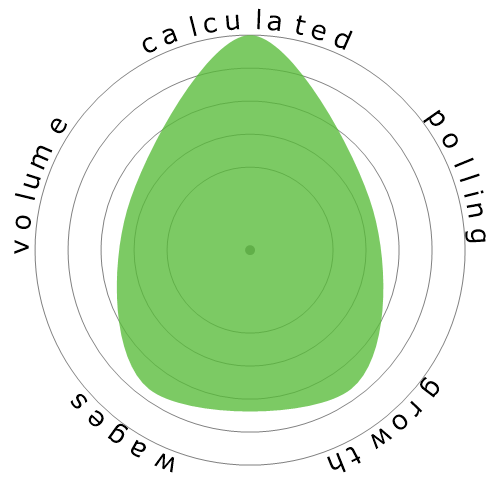
What does this snowflake show?
The Snowflake is a visual summary of the five badges: Automation Risk (calculated), Risk (polled), Growth, Wages and Volume. It gives you an instant snapshot of an occupations profile. The colour of the Snowflake relates to its size. The better the occupation scores in relation to others, the larger and greener the Snowflake becomes.
JOB SCORE
7.1/10
What's this?
Job Score (higher is better):

We rate jobs using four factors. These are:

- Chance of being automated
- Job growth
- Wages
- Volume of available positions

These are some key things to think about when job hunting.

Risk & user votes

Calculated automation risk

19% (Minimal Risk)

Minimal Risk (0-20%): This occupation appears difficult to replace end-to-end with current or near-future automation, including AI software and robotics. Roles in this range usually depend on human judgement, creativity, care, leadership, specialist expertise, or adapting to messy real-world situations. AI and machines may still change parts of the work, but the occupation is likely to remain a distinct human role.

More information on what this score is, and how it is calculated is available here.

Human strengths important in this job

These are human abilities and work contexts that are important in this occupation. They may help explain why parts of the role are harder to replace end-to-end, but they are not the only inputs into the automation score.

Thinking creatively

Very important
Why this matters
Coming up with original ideas and designs—creating new concepts, products, systems, or artistic work. This kind of open-ended invention and taste-based judgment is harder to automate end-to-end than routine, rule-based tasks.
Jobs that also use this strength

Decision-making and problem solving

Very important
Why this matters
Analyze information, weigh tradeoffs, and choose the best solution—especially when situations are ambiguous, high-stakes, or have real-world consequences.
Jobs that also use this strength

Communicating with people outside the organization

Very important
Why this matters
Represents the organization to customers, the public, or government—handling questions, concerns, and relationship-building through conversations, writing, calls, or email.
Jobs that also use this strength

Operations analysis

Very important
Why this matters
Figure out what people need and what a product must do, then translate those requirements into a workable design.
Jobs that also use this strength

Social perceptiveness

Quite important
Why this matters
Noticing others’ emotions and reactions in the moment and adjusting what you say or do based on why they’re responding that way.
Jobs that also use this strength
Show 5 more strengths

Negotiation

Quite important
Why this matters
Bringing people together to reconcile differences, trade off priorities, and reach agreements—work that depends on trust, persuasion, and reading the situation.
Jobs that also use this strength

Coordinating others’ work

Quite important
Why this matters
Bringing people together, assigning tasks, and keeping a group aligned so work gets done.
Jobs that also use this strength

Coaching and developing others

Quite important
Why this matters
Helps people learn and improve through coaching, mentoring, and feedback. This relies on trust, motivation, and adapting guidance to each person—work that’s hard to replace end-to-end with automation.
Jobs that also use this strength

Developing objectives and strategies

Quite important
Why this matters
Sets long-term goals and chooses strategies and actions to reach them, weighing tradeoffs and adapting plans as conditions change.
Jobs that also use this strength

Active learning

Quite important
Why this matters
Keeps learning from new information and applying it to make better decisions now and in the future, especially when situations change.
Jobs that also use this strength

What users think

Based on 996 votes

39% chance of full automation within the next two decades

Our visitors have voted there's a low chance this occupation will be automated. This assessment is further supported by the calculated automation risk level, which estimates 19% chance of automation.

What do you think the risk of automation is?

What is the likelihood that Architects, Except Landscape and Naval will be replaced by robots or artificial intelligence within the next 20 years?

Sentiment

Based on user votes over time

View sentiment trend

How opinions have changed over time

Pay & outlook

Wages

High paid relative to other professions

In 2024, the median annual wage for Architects, Except Landscape and Naval was $96,690 ($46 per hour).

The median annual wage for Architects, Except Landscape and Naval was 95.3% higher than the national median annual wage, which stood at $49,500.

View wage trend

Wages over time

* Data from the Bureau of Labor Statistics

Growth

Fast growth relative to other professions

The number of 'Architects, Except Landscape and Naval' job openings is expected to rise 3.9% by 2034

View employment trend

Total employment, and estimated job openings

* Data from the Bureau of Labor Statistics for the period between 2023 and 2033
Updated projections are due 09-2025.

Volume

Greater range of job opportunities compared to other professions

As of 2024 there were 111,140 people employed as 'Architects, Except Landscape and Naval' within the United States.

This represents around 0.07% of the employed workforce across the country

Put another way, around 1 in 1 thousand people are employed as 'Architects, Except Landscape and Naval'.

People also viewed

Lawyers Computer Programmers Graphic Designers Civil Engineers Actors

What people are saying (26)

Leave a comment
Sawyer (Low)
10 Sep 2024 22:41
It needs to pour your soul into it to really make a breakthrough. Robots don't have souls
erich (Low)
30 Mar 2026 12:40
Although AI will change architecture an make an individual architect be able to do more work, it still requires human lead. Each case where architecture is needed is unique. Hard to automate, but easy to speed up the workflow.
sama
23 Dec 2022 19:30
An architect is more than a concept or a few words. It's about thinking, conceptualizing, and making it a reality.
Molnár- Varga Szabina (Low)
14 Mar 2026 15:13
It requires creativity and human decision-making.
oscar walker (No chance)
02 Apr 2025 00:59
blend of creativity and problem solving to design spaces that align with the environment surrounding. Very low to no chance of being replaced by robots and AI in comparison to other industries.
Michael E. (Low)
08 Dec 2025 01:00
A low chance for full automation of the profession itself because of the significant risk to human health, safety, and welfare involved -- people are generally less willing to accept a computer program as the ultimate responsible party for their safety. However, a high chance for partial automation of certain aspects of the profession, especially repetitive low-risk tasks such as detail selection (from a library of previously drawn details, not freshly AI-generated ones) and high-volume design iterations.
x (Low)
27 Nov 2025 10:54
law. someone needs to be responsible financially and legally for the outcome and possible mistakes + some projects [military] are secret and even cannot be made on computer with internet
Mark (No chance)
08 Jul 2024 18:20
There is no possible way for AI to take over architecture. To start, a computer cannot hold legal liability. AI doesn’t create; it only copies and reproduces. On a regular basis, my job requires unique solutions and details that cannot be pulled from other sources.

We need to take too many unrelated factors into account for any particular design, versus the cost and time it would take for an AI to be developed to take the job. It would never be profitable for the AI developer. Besides, they wouldn't want the liability risk we have for a mistake that can cost lives.
Ben Bailey (Uncertain)
21 Feb 2024 21:15
I would love to have AI assist in automating the aspects of Architecture that are tedious, like making sure everything is up to code or automatically adjusting things after moving something else, but I fear that people will become lazy and let AI do the job for them.
Yoshimata R
25 Apr 2023 17:55
This will not be popular, but our firm already uses AI: clients type in or speak their ideas and examples The programs we use come up with a myriad of solutions that the clients themselves can then configure and reconfigure at will with all structural processes, including loadbearing etc. built-in throughout the process. 16 of the 38 people at our firm have been laid off since this started.
:))) (Moderate)
03 Aug 2022 00:16
Currently, as a student at one of the top architecture schools, I can observe how the most successful students utilize AI. It's clear to see how it improves their workflow and design progress, even as early as 2022.

Already, AI can handle most of the work for an architect. I believe that the next 20 years will further popularize AI within the profession, reducing the amount of work done manually.
Sebastian from Argentina (Low)
14 Nov 2019 12:33
Creativity from architects mind couldn't be replaced by AI, But some typical architecture room plans, could be systematized by machine learning on cad programs, like actual libraries of equipment, it could be library of rooms, baths, etc.
Lilly (Low)
12 Aug 2019 22:55
I think it would be quite hard for robots to take clients ideas for architecture and turn it into a floorplan since there are billions of ways to build a house.
David J Gill
24 Apr 2019 22:43
More effective design software will raise productivity and reduce the number of staff required to complete project documents.
Marta (Uncertain)
15 Feb 2023 23:56
I totally agree. Students and young professionals may have problem with finding a job. Nowadays, they usually do repetitive CAD drawings/models (the main concept was designed by e.g. senior architect), and it all can be automated, especially with BIM
Dean B
26 Mar 2019 03:54
This is an art form that’s practical so I don’t see it going
HMS (No chance)
15 Mar 2023 06:49
Architects are a lot like an artist. AI cannot create cannot something that requires human originality. No two architects are the same, just as two pieces of art are not the same. Architecture requires you to put creativity, originality, emotion, and the social aspect into your work.
J (Uncertain)
15 Oct 2019 03:22
Depends on the kind of architecture, the way that the industry itself thinks about what architecture means (an engineering/optimization problem versus art, desire to rapidly customize vs work on the process with other humans) and what clients demand.
pgm777
29 Aug 2019 12:26
computerisation will help and not hinder the architectural profession. Automisation is something that has no place
Mark (Uncertain)
02 May 2023 19:29
Until recently (through March and April 2023), and after having seen the work that Dall-e 2 had produced, I thought it incredibly likely. The argument that architects would still be required seemed to hinge on "you need to interface with a human to get a building built", but I don't think that's true (if a client could save tens of thousands of dollars by inputting their requests on a keyboard, rather than talking to a person, they'd opt for the latter). However, the one aspect of the job that's overlooked is LIABILITY. Currently architects are legally liable for the work they produce, and any failings over that work. AI offers no LIABILITY -- and I highly doubt the software design companies who are producing that AI are willing to accept liability -- and until someone, or a team of someones, is willing to accept that legal responsibility, AI shouldn't be able to threaten that job. However, I said "could go either way" because it's highly possible that people are so stupid, that they would sign a contract that frees the AI architect of liability if it meant they could save a few dollars on fees.
phamiliar
08 Mar 2024 20:19
It is likely that AI could be the architectural designer and code checker while a civil engineer is responsible for the life and safety of the overall design. I think the job won't necessarily go away its just that there will be many production staff jobs that will be eliminated.
king rocker (Highly likely)
24 Feb 2022 14:51
LOL it's already dead. Almost no one hires architects now, there are so many tools that already do their job. Wake up, it's game over for this one. The site is way behind the times.
I'dRatherNotInputAName (No chance)
27 Oct 2023 20:41
"LOL it's already dead."
Source? Or did it come to you in a dream?
Sameer
29 Feb 2024 12:01
AI isn’t that capable to satisfy the client with the structure design… however it could help to make the work easy but it can’t overtake the profession.

Leave a reply about this occupation
0/8000

Job description

Plan and design structures, such as private residences, office buildings, theaters, factories, and other structural property.

O*NET-SOC code: 17-1011.00