Automation Risk
Each occupation shows a probability of automation. A higher score means machines and algorithms are more likely to take over the role in the future.
| SUMMARY |
37%
Low Risk
|
13%
Minimal Risk
|
16%
Minimal Risk
|
20%
Minimal Risk
|
19%
Minimal Risk
|
30%
Low Risk
|
| JOB SCORE | 5.7/10 | 7.0/10 | 6.5/10 | 7.0/10 | 7.3/10 | 5.6/10 |
| POLLING |
33%
(Low Risk,
Based on 84 votes)
|
30%
(Low Risk,
Based on 223 votes)
|
25%
(Low Risk,
Based on 110 votes)
|
36%
(Low Risk,
Based on 28 votes)
|
39%
(Low Risk,
Based on 153 votes)
|
46%
(Moderate Risk,
Based on 111 votes)
|
|
GROWTH
by year 2034
|
6.7%
|
15.4%
|
8.1%
|
4.5%
|
10.8%
|
12.5%
|
| WAGES |
$41,560
or $19.98 per hour
|
$57,950
or $27.86 per hour
|
$50,280
or $24.17 per hour
|
$63,000
or $30.29 per hour
|
$65,850
or $31.66 per hour
|
$44,200
or $21.25 per hour
|
|
VOLUME
as of 2024
|
70,240
|
96,040
|
3,320
|
65,150
|
436,610
|
793,460
|
| SNOWFLAKE |

|

|

|

|
|

|
| DESCRIPTION | Provide skincare treatments to face and body to enhance an individual's appearance. Includes electrologists and laser hair removal specialists. | Perform therapeutic massages of soft tissues and joints. May assist in the assessment of range of motion and muscle strength, or propose client therapy plans. | Apply makeup to performers to reflect period, setting, and situation of their role. | Provide and manage health education programs that help individuals, families, and their communities maximize and maintain healthy lifestyles. Use data to identify community needs prior to planning, implementing, monitoring, and evaluating programs designed to encourage healthy lifestyles, policies, and environments. May link health systems, health providers, insurers, and patients to address individual and population health needs. May serve as resource to assist individuals, other health professionals, or the community, and may administer fiscal resources for health education programs. | Design or conduct work-related training and development programs to improve individual skills or organizational performance. May analyze organizational training needs or evaluate training effectiveness. | Perform administrative and certain clinical duties under the direction of a physician. Administrative duties may include scheduling appointments, maintaining medical records, billing, and coding information for insurance purposes. Clinical duties may include taking and recording vital signs and medical histories, preparing patients for examination, drawing blood, and administering medications as directed by physician. |
Curious how automation and AI could affect your career? Our comparison tool lets you view two or more jobs side by side, helping you quickly spot differences in risk level, pay, growth, and popularity. All of this is based on a mix of academic research, user polling, and official labour data.
Each occupation shows a probability of automation. A higher score means machines and algorithms are more likely to take over the role in the future.
A quick summary of how a job performs overall — factoring in wages, growth, volume, and automation risk. It’s a handy way to see the bigger picture at a glance.
Thousands of visitors cast their votes on how “automatable” each job feels. These community insights are shown alongside the calculated probabilities.
See how fast each occupation is projected to grow and what people earn on average. High wages don’t always mean high security — automation risk still matters.
Explore how many people currently work in each occupation and in which year the data was recorded. Popularity can affect how disruptive automation will be for the wider economy.
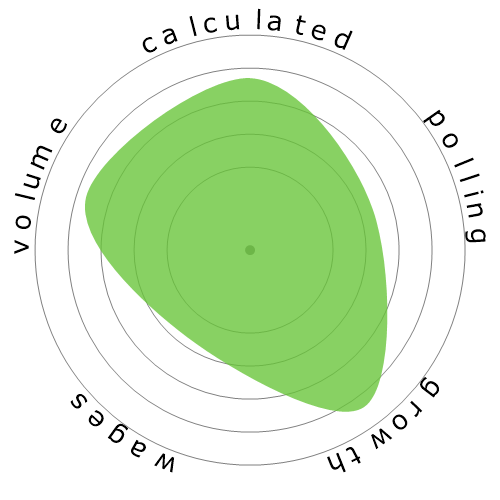
Each snowflake visualises the balance between automation risk, wages, growth, and job volume. Bigger and greener areas mean stronger performance in that dimension.
Use this comparison page to research careers, guide students, or simply explore the future of work. All data is regularly updated to keep the results relevant.