Automation Risk
Each occupation shows a probability of automation. A higher score means machines and algorithms are more likely to take over the role in the future.
| SUMMARY |
50%
Moderate Risk
|
10%
Minimal Risk
|
28%
Low Risk
|
10%
Minimal Risk
|
24%
Low Risk
|
33%
Low Risk
|
| JOB SCORE | 4.0/10 | 7.6/10 | 4.1/10 | 6.7/10 | 5.1/10 | 4.3/10 |
| POLLING |
52%
(Moderate Risk,
Based on 27 votes)
|
22%
(Low Risk,
Based on 78 votes)
|
There hasn't been enough votes on this occupation yet
|
26%
(Low Risk,
Based on 37 votes)
|
There hasn't been enough votes on this occupation yet
|
49%
(Moderate Risk,
Based on 62 votes)
|
|
GROWTH
by year 2034
|
4.3%
|
5.4%
|
-3.2%
|
5.8%
|
4.0%
|
3.5%
|
| WAGES |
$46,790
or $22.49 per hour
|
$71,410
or $34.33 per hour
|
$54,310
or $26.11 per hour
|
$79,120
or $38.04 per hour
|
$49,490
or $23.79 per hour
|
$52,000
or $25.00 per hour
|
|
VOLUME
as of 2024
|
14,340
|
16,600
|
31,080
|
2,470
|
39,390
|
76,190
|
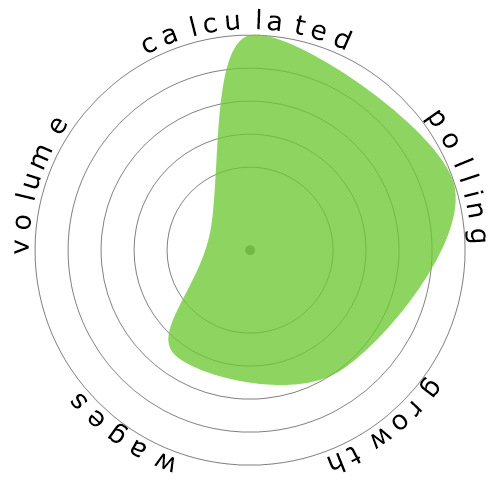
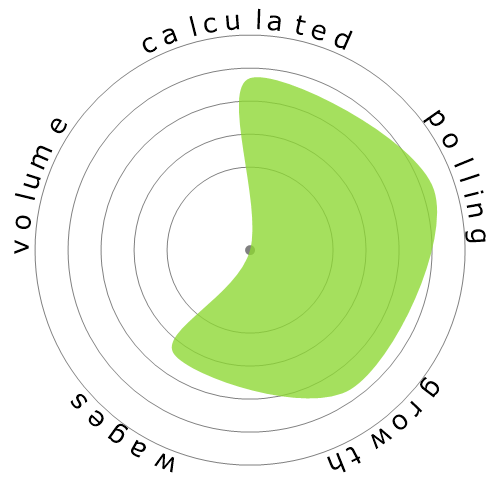
| SNOWFLAKE |

|
|

|
|

|

|
| DESCRIPTION | Work with agricultural scientists in plant, fiber, and animal research, or assist with animal breeding and nutrition. Set up or maintain laboratory equipment and collect samples from crops or animals. Prepare specimens or record data to assist scientists in biology or related life science experiments. Conduct tests and experiments to improve yield and quality of crops or to increase the resistance of plants and animals to disease or insects. | Conduct research in breeding, physiology, production, yield, and management of crops and agricultural plants or trees, shrubs, and nursery stock, their growth in soils, and control of pests; or study the chemical, physical, biological, and mineralogical composition of soils as they relate to plant or crop growth. May classify and map soils and investigate effects of alternative practices on soil and crop productivity. | Provide technical assistance regarding the conservation of soil, water, forests, or related natural resources. May compile data pertaining to size, content, condition, and other characteristics of forest tracts under the direction of foresters, or train and lead forest workers in forest propagation and fire prevention and suppression. May assist conservation scientists in managing, improving, and protecting rangelands and wildlife habitats. | Conduct research in the genetics, nutrition, reproduction, growth, and development of domestic farm animals. | Perform laboratory and field tests to monitor the environment and investigate sources of pollution, including those that affect health, under the direction of an environmental scientist, engineer, or other specialist. May collect samples of gases, soil, water, and other materials for testing. | Assist biological and medical scientists. Set up, operate, and maintain laboratory instruments and equipment, monitor experiments, collect data and samples, make observations, and calculate and record results. May analyze organic substances, such as blood, food, and drugs. |
Curious how automation and AI could affect your career? Our comparison tool lets you view two or more jobs side by side, helping you quickly spot differences in risk level, pay, growth, and popularity. All of this is based on a mix of academic research, user polling, and official labour data.
Each occupation shows a probability of automation. A higher score means machines and algorithms are more likely to take over the role in the future.
A quick summary of how a job performs overall — factoring in wages, growth, volume, and automation risk. It’s a handy way to see the bigger picture at a glance.
Thousands of visitors cast their votes on how “automatable” each job feels. These community insights are shown alongside the calculated probabilities.
See how fast each occupation is projected to grow and what people earn on average. High wages don’t always mean high security — automation risk still matters.
Explore how many people currently work in each occupation and in which year the data was recorded. Popularity can affect how disruptive automation will be for the wider economy.
Each snowflake visualises the balance between automation risk, wages, growth, and job volume. Bigger and greener areas mean stronger performance in that dimension.
Use this comparison page to research careers, guide students, or simply explore the future of work. All data is regularly updated to keep the results relevant.