Soil and Plant Scientists

Minimal Risk
Low High

Alternative careers

Related career paths that build on similar skills and experience

Agricultural Sciences Teachers, Postsecondary
10% automation risk | Minimal Risk
Pays better
Similar risk View career
Why it fits

Agronomy, soils, crop science, research, field examples, and curriculum development are reusable.

Microbiologists
13% automation risk | Minimal Risk
Pays better
View career
Why it fits

Soil microbes, plant disease, lab methods, samples, experiments, and data interpretation provide a bridge.

Geneticists
10% automation risk | Minimal Risk
Pays better More jobs
Similar risk View career
Why it fits

Plant breeding, traits, heredity, field outcomes, research design, and data interpretation overlap.

Hydrologists
19% automation risk | Minimal Risk
Pays better
View career
Why it fits

Soil-water movement, infiltration, watersheds, field data, and land-management impacts overlap.


Share your results with friends and family.

Occupation snapshot

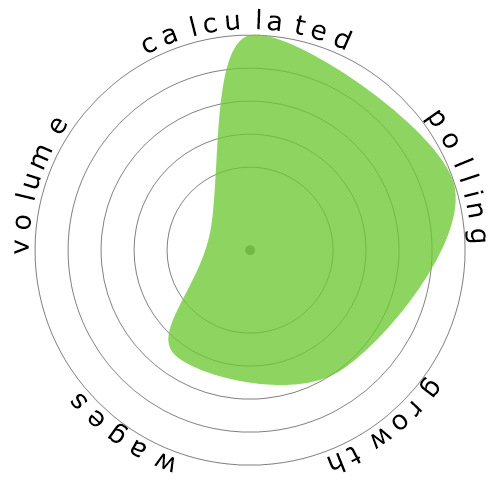
What does this snowflake show?
The Snowflake is a visual summary of the five badges: Automation Risk (calculated), Risk (polled), Growth, Wages and Volume. It gives you an instant snapshot of an occupations profile. The colour of the Snowflake relates to its size. The better the occupation scores in relation to others, the larger and greener the Snowflake becomes.
JOB SCORE
7.6/10
What's this?
Job Score (higher is better):

We rate jobs using four factors. These are:

- Chance of being automated
- Job growth
- Wages
- Volume of available positions

These are some key things to think about when job hunting.

Risk & user votes

Calculated automation risk

10% (Minimal Risk)

Minimal Risk (0-20%): This occupation appears difficult to replace end-to-end with current or near-future automation, including AI software and robotics. Roles in this range usually depend on human judgement, creativity, care, leadership, specialist expertise, or adapting to messy real-world situations. AI and machines may still change parts of the work, but the occupation is likely to remain a distinct human role.

More information on what this score is, and how it is calculated is available here.

Human strengths important in this job

These are human abilities and work contexts that are important in this occupation. They may help explain why parts of the role are harder to replace end-to-end, but they are not the only inputs into the automation score.

Thinking creatively

Very important
Why this matters
Coming up with original ideas and designs—creating new concepts, products, systems, or artistic work. This kind of open-ended invention and taste-based judgment is harder to automate end-to-end than routine, rule-based tasks.
Jobs that also use this strength

Decision-making and problem solving

Very important
Why this matters
Analyze information, weigh tradeoffs, and choose the best solution—especially when situations are ambiguous, high-stakes, or have real-world consequences.
Jobs that also use this strength

Active learning

Very important
Why this matters
Keeps learning from new information and applying it to make better decisions now and in the future, especially when situations change.
Jobs that also use this strength

Social perceptiveness

Quite important
Why this matters
Noticing others’ emotions and reactions in the moment and adjusting what you say or do based on why they’re responding that way.
Jobs that also use this strength

Coordinating others’ work

Quite important
Why this matters
Bringing people together, assigning tasks, and keeping a group aligned so work gets done.
Jobs that also use this strength
Show 4 more strengths

Communicating with people outside the organization

Quite important
Why this matters
Represents the organization to customers, the public, or government—handling questions, concerns, and relationship-building through conversations, writing, calls, or email.
Jobs that also use this strength

Developing objectives and strategies

Quite important
Why this matters
Sets long-term goals and chooses strategies and actions to reach them, weighing tradeoffs and adapting plans as conditions change.
Jobs that also use this strength

Operations analysis

Quite important
Why this matters
Figure out what people need and what a product must do, then translate those requirements into a workable design.
Jobs that also use this strength

Education and training expertise

Quite important
Why this matters
Designing and delivering instruction—adapting lessons to different learners and measuring whether training actually works.
Jobs that also use this strength

What users think

Based on 78 votes

22% chance of full automation within the next two decades

Our visitors have voted there's a low chance this occupation will be automated. This assessment is further supported by the calculated automation risk level, which estimates 10% chance of automation.

What do you think the risk of automation is?

What is the likelihood that Soil and Plant Scientists will be replaced by robots or artificial intelligence within the next 20 years?

View sentiment trend

Pay & outlook

Wages

High paid relative to other professions

In 2024, the median annual wage for Soil and Plant Scientists was $71,410 ($34 per hour).

The median annual wage for Soil and Plant Scientists was 44.3% higher than the national median annual wage, which stood at $49,500.

View wage trend

Wages over time

* Data from the Bureau of Labor Statistics

Growth

Fast growth relative to other professions

The number of 'Soil and Plant Scientists' job openings is expected to rise 5.4% by 2034

View employment trend

Total employment, and estimated job openings

* Data from the Bureau of Labor Statistics for the period between 2023 and 2033
Updated projections are due 09-2025.

Volume

Lower range of job opportunities compared to other professions

As of 2024 there were 16,600 people employed as 'Soil and Plant Scientists' within the United States.

This represents around < 0.001% of the employed workforce across the country

Put another way, around 1 in 9 thousand people are employed as 'Soil and Plant Scientists'.

People also viewed

Lawyers Computer Programmers Web Developers Accountants and Auditors Actors

What people are saying (4)

Sam (No chance)
04 Nov 2025 12:57
Coz it's a thing like where you have to check the particular place, see each place is different and soil, environment and more but AI works on a set of data so new place new data and requires to talk with people and negotiate
Obanuchem Emmanuel (Low)
13 Dec 2024 08:55
Because new plant will still be discovered and AI can't access what doesn't already exist. AI need human knowledge to process. So, plant scientists will never depreciate as we'll make more medicine; vaccines and herbal drugs and new research will be needed as times goes on.
Gabriel
21 Feb 2021 18:10
No comments here, so let me put my own in it. So yes, robots will take over the world. If your reading this, don't give up what ever your searching or fighting for. Just go for it or just do it and don't forget to be happy and satisfied in the end ok?
arturo F (Moderate)
21 Sep 2020 22:58
The use of drones, automated real-time pcr, automated tractors, apps that identify diseases and pests, makes use of fewer university personnel and more specialized technical personnel.

Leave a reply about this occupation
0/8000

Job description

Conduct research in breeding, physiology, production, yield, and management of crops and agricultural plants or trees, shrubs, and nursery stock, their growth in soils, and control of pests; or study the chemical, physical, biological, and mineralogical composition of soils as they relate to plant or crop growth. May classify and map soils and investigate effects of alternative practices on soil and crop productivity.

O*NET-SOC code: 19-1013.00