Automation Risk
Each occupation shows a probability of automation. A higher score means machines and algorithms are more likely to take over the role in the future.
| SUMMARY |
46%
Moderate Risk
|
20%
Minimal Risk
|
28%
Low Risk
|
19%
Minimal Risk
|
22%
Low Risk
|
29%
Low Risk
|
| JOB SCORE | 4.8/10 | 5.6/10 | 6.7/10 | 5.2/10 | 6.6/10 | 6.9/10 |
| POLLING |
59%
(Moderate Risk,
Based on 58 votes)
|
There hasn't been enough votes on this occupation yet
|
51%
(Moderate Risk,
Based on 85 votes)
|
42%
(Moderate Risk,
Based on 83 votes)
|
49%
(Moderate Risk,
Based on 67 votes)
|
37%
(Low Risk,
Based on 417 votes)
|
|
GROWTH
by year 2034
|
6.4%
|
0.6%
|
8.2%
|
-3.1%
|
8.7%
|
8.7%
|
| WAGES |
$78,380
or $37.68 per hour
|
$117,960
or $56.71 per hour
|
$108,970
or $52.39 per hour
|
$97,200
or $46.73 per hour
|
$135,980
or $65.37 per hour
|
$103,790
or $49.89 per hour
|
|
VOLUME
as of 2024
|
12,790
|
22,580
|
439,380
|
1,380
|
64,770
|
497,800
|
| SNOWFLAKE |

|

|
|

|

|
|
| DESCRIPTION | Research, study, and prepare maps and other spatial data in digital or graphic form for one or more purposes, such as legal, social, political, educational, and design purposes. May work with Geographic Information Systems (GIS). May design and evaluate algorithms, data structures, and user interfaces for GIS and mapping systems. May collect, analyze, and interpret geographic information provided by geodetic surveys, aerial photographs, and satellite data. | Apply remote sensing principles and methods to analyze data and solve problems in areas such as natural resource management, urban planning, or homeland security. May develop new sensor systems, analytical techniques, or new applications for existing systems. | Assist scientists or related professionals in building, maintaining, modifying, or using geographic information systems (GIS) databases. May also perform some custom application development or provide user support. | Study the nature and use of areas of the Earth's surface, relating and interpreting interactions of physical and cultural phenomena. Conduct research on physical aspects of a region, including land forms, climates, soils, plants, and animals, and conduct research on the spatial implications of human activities within a given area, including social characteristics, economic activities, and political organization, as well as researching interdependence between regions at scales ranging from local to global. | Design strategies for enterprise databases, data warehouse systems, and multidimensional networks. Set standards for database operations, programming, query processes, and security. Model, design, and construct large relational databases or data warehouses. Create and optimize data models for warehouse infrastructure and workflow. Integrate new systems with existing warehouse structure and refine system performance and functionality. | Analyze science, engineering, business, and other data processing problems to develop and implement solutions to complex applications problems, system administration issues, or network concerns. Perform systems management and integration functions, improve existing computer systems, and review computer system capabilities, workflow, and schedule limitations. May analyze or recommend commercially available software. |
Curious how automation and AI could affect your career? Our comparison tool lets you view two or more jobs side by side, helping you quickly spot differences in risk level, pay, growth, and popularity. All of this is based on a mix of academic research, user polling, and official labour data.
Each occupation shows a probability of automation. A higher score means machines and algorithms are more likely to take over the role in the future.
A quick summary of how a job performs overall — factoring in wages, growth, volume, and automation risk. It’s a handy way to see the bigger picture at a glance.
Thousands of visitors cast their votes on how “automatable” each job feels. These community insights are shown alongside the calculated probabilities.
See how fast each occupation is projected to grow and what people earn on average. High wages don’t always mean high security — automation risk still matters.
Explore how many people currently work in each occupation and in which year the data was recorded. Popularity can affect how disruptive automation will be for the wider economy.
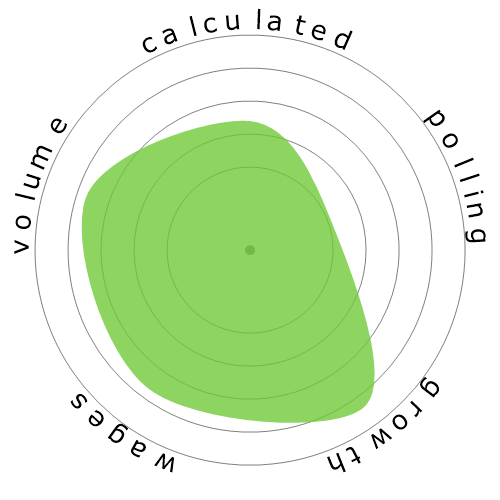
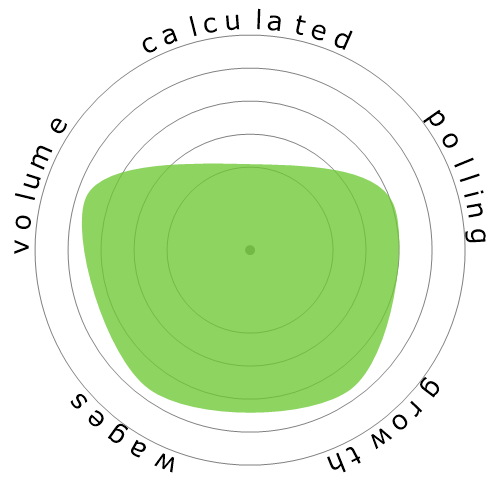
Each snowflake visualises the balance between automation risk, wages, growth, and job volume. Bigger and greener areas mean stronger performance in that dimension.
Use this comparison page to research careers, guide students, or simply explore the future of work. All data is regularly updated to keep the results relevant.