Geographic Information Systems Technologists and Technicians

Low Risk
Low High

Explore safer careers (4)

Lower estimated automation risk

Database Architects
22% automation risk | Low Risk
Pays better
5.6 pts lower View career
Why it fits

Uses GIS database design, schema maintenance, metadata, data integrity, and user requirements.

Geographers
19% automation risk | Minimal Risk
9 pts lower View career
Why it fits

Applies spatial analysis, regional patterns, mapping, field data, and geographic research methods.

Remote Sensing Scientists and Technologists
20% automation risk | Minimal Risk
8 pts lower View career
Why it fits

Builds on geospatial analysis, imagery, spatial models, data accuracy, and scientific mapping methods.

Urban and Regional Planners
18% automation risk | Minimal Risk
9.4 pts lower View career
Why it fits

Uses land-use data, maps, demographics, transportation layers, zoning context, and public-planning analysis.


Share your results with friends and family.

Occupation snapshot

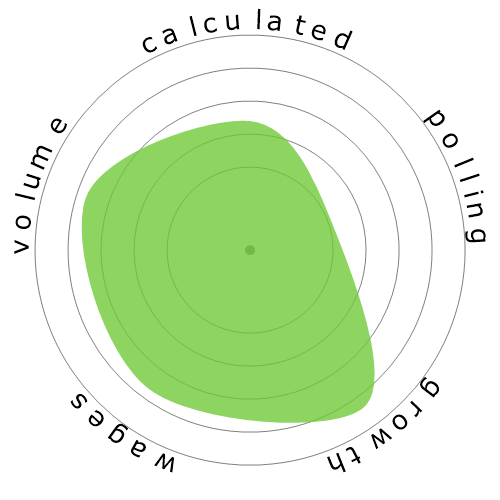
What does this snowflake show?
The Snowflake is a visual summary of the five badges: Automation Risk (calculated), Risk (polled), Growth, Wages and Volume. It gives you an instant snapshot of an occupations profile. The colour of the Snowflake relates to its size. The better the occupation scores in relation to others, the larger and greener the Snowflake becomes.
JOB SCORE
6.7/10
What's this?
Job Score (higher is better):

We rate jobs using four factors. These are:

- Chance of being automated
- Job growth
- Wages
- Volume of available positions

These are some key things to think about when job hunting.

Risk & user votes

Calculated automation risk

28% (Low Risk)

Low Risk (21-40%): This occupation has a lower risk of full replacement by AI, software, or robotic systems. Some tasks may be automated or assisted, but the role usually still relies on human judgement, communication, responsibility, physical adaptability, or practical decision-making.

More information on what this score is, and how it is calculated is available here.

Human strengths important in this job

These are human abilities and work contexts that are important in this occupation. They may help explain why parts of the role are harder to replace end-to-end, but they are not the only inputs into the automation score.

Decision-making and problem solving

Very important
Why this matters
Analyze information, weigh tradeoffs, and choose the best solution—especially when situations are ambiguous, high-stakes, or have real-world consequences.
Jobs that also use this strength

Thinking creatively

Quite important
Why this matters
Coming up with original ideas and designs—creating new concepts, products, systems, or artistic work. This kind of open-ended invention and taste-based judgment is harder to automate end-to-end than routine, rule-based tasks.
Jobs that also use this strength

Coordinating others’ work

Quite important
Why this matters
Bringing people together, assigning tasks, and keeping a group aligned so work gets done.
Jobs that also use this strength

Communicating with people outside the organization

Quite important
Why this matters
Represents the organization to customers, the public, or government—handling questions, concerns, and relationship-building through conversations, writing, calls, or email.
Jobs that also use this strength

Developing objectives and strategies

Quite important
Why this matters
Sets long-term goals and chooses strategies and actions to reach them, weighing tradeoffs and adapting plans as conditions change.
Jobs that also use this strength
Show 2 more strengths

Active learning

Quite important
Why this matters
Keeps learning from new information and applying it to make better decisions now and in the future, especially when situations change.
Jobs that also use this strength

Education and training expertise

Quite important
Why this matters
Designing and delivering instruction—adapting lessons to different learners and measuring whether training actually works.
Jobs that also use this strength

What users think

Based on 85 votes

51% chance of full automation within the next two decades

Our visitors have voted they are unsure if this occupation will be automated. However, employees may be able to find reassurance in the automated risk level we have generated, which shows 28% chance of automation.

What do you think the risk of automation is?

What is the likelihood that Geographic Information Systems Technologists and Technicians will be replaced by robots or artificial intelligence within the next 20 years?

Sentiment

Based on user votes over time

View sentiment trend

How opinions have changed over time

Pay & outlook

Wages

Very high paid relative to other professions

In 2024, the median annual wage for Computer Occupations, All Other was $108,970 ($52 per hour).

The median annual wage for Computer Occupations, All Other was 120.1% higher than the national median annual wage, which stood at $49,500.

* Data from the Bureau of Labor Statistics

Growth

Very fast growth relative to other professions

The number of 'Computer Occupations, All Other' job openings is expected to rise 8.2% by 2034

* Data from the Bureau of Labor Statistics for the period between 2023 and 2033
Updated projections are due 09-2025.

Volume

Significantly greater range of job opportunities compared to other professions

As of 2024 there were 439,380 people employed as 'Computer Occupations, All Other' within the United States.

This represents around 0.28% of the employed workforce across the country

Put another way, around 1 in 350 people are employed as 'Computer Occupations, All Other'.

People also viewed

Computer Programmers Web Developers Lawyers Civil Engineers Accountants and Auditors

What people are saying (3)

John (Low)
01 May 2026 19:47
Human decisions and interactions will almost certainly remain relevant throughout the early age of AI and automation. Careers in Geographic Information Systems that require field work will be very secure. These careers will also likely be on forefront of automation development and design with new “GeoAI” tools, giving them an edge over careers that do not utilize automation tools or do not blend automation with human analysis.
Utku (No chance)
01 Aug 2025 06:20
still need human eye to control some geographic features, make changes.
Muaaz Abdul Qayyum (Low)
17 Aug 2024 16:15
Geographic Information Systems (GIS) development is based on curiosity about the world, and curiosity is a human emotion and not a machine tactic. However, we need machines to make our lives easier.

Leave a reply about this occupation
0/8000

Job description

Assist scientists or related professionals in building, maintaining, modifying, or using geographic information systems (GIS) databases. May also perform some custom application development or provide user support.

O*NET-SOC code: 15-1299.02