Neuropsychologists

Minimal Risk
Low High

Alternative careers

Related career paths that build on similar skills and experience

Clinical and Counseling Psychologists
10% automation risk | Minimal Risk
Higher growth More jobs
Similar risk View career
Why it fits

Applies assessment, diagnosis, treatment plans, interviews, mental health evidence, and patient communication.

Clinical Neuropsychologists
10% automation risk | Minimal Risk
Similar risk View career
Why it fits

Directly reuses neuropsychological assessment, brain-behavior knowledge, reports, diagnosis, treatment planning, and patient consultation.

Medical Scientists, Except Epidemiologists
12% automation risk | Minimal Risk
Higher growth More jobs
View career
Why it fits

Transfers brain research, clinical data, protocols, outcomes, literature review, and scientific publication.

Industrial-Organizational Psychologists
9% automation risk | Minimal Risk
Higher growth
Similar risk View career
Why it fits

Applies psychometrics, assessment design, research methods, statistics, reports, and human-performance evidence.


Share your results with friends and family.

Occupation snapshot

What does this snowflake show?
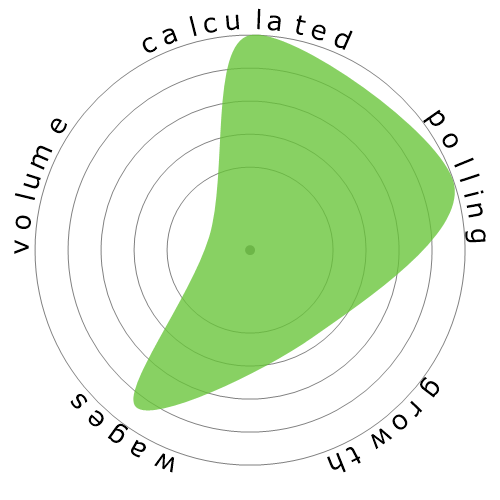
The Snowflake is a visual summary of the five badges: Automation Risk (calculated), Risk (polled), Growth, Wages and Volume. It gives you an instant snapshot of an occupations profile. The colour of the Snowflake relates to its size. The better the occupation scores in relation to others, the larger and greener the Snowflake becomes.
JOB SCORE
8.1/10
What's this?
Job Score (higher is better):

We rate jobs using four factors. These are:

- Chance of being automated
- Job growth
- Wages
- Volume of available positions

These are some key things to think about when job hunting.

Risk & user votes

Calculated automation risk

10% (Minimal Risk)

Minimal Risk (0-20%): This occupation appears difficult to replace end-to-end with current or near-future automation, including AI software and robotics. Roles in this range usually depend on human judgement, creativity, care, leadership, specialist expertise, or adapting to messy real-world situations. AI and machines may still change parts of the work, but the occupation is likely to remain a distinct human role.

More information on what this score is, and how it is calculated is available here.

Human strengths important in this job

These are human abilities and work contexts that are important in this occupation. They may help explain why parts of the role are harder to replace end-to-end, but they are not the only inputs into the automation score.

Decision-making and problem solving

Very important
Why this matters
Analyze information, weigh tradeoffs, and choose the best solution—especially when situations are ambiguous, high-stakes, or have real-world consequences.
Jobs that also use this strength

Therapy and counseling expertise

Very important
Why this matters
Uses clinical and counseling methods to assess people’s needs, build trust, and guide treatment or rehabilitation—work that depends on empathy, nuanced judgment, and adapting to each person’s situation.
Jobs that also use this strength

Communicating with people outside the organization

Very important
Why this matters
Represents the organization to customers, the public, or government—handling questions, concerns, and relationship-building through conversations, writing, calls, or email.
Jobs that also use this strength

Psychology knowledge

Very important
Why this matters
Understanding human behavior, motivation, and individual differences to assess needs, respond appropriately, and support behavior change or mental health.
Jobs that also use this strength

Education and training expertise

Very important
Why this matters
Designing and delivering instruction—adapting lessons to different learners and measuring whether training actually works.
Jobs that also use this strength
Show 5 more strengths

Thinking creatively

Quite important
Why this matters
Coming up with original ideas and designs—creating new concepts, products, systems, or artistic work. This kind of open-ended invention and taste-based judgment is harder to automate end-to-end than routine, rule-based tasks.
Jobs that also use this strength

Persuasion

Quite important
Why this matters
Influencing people to change their minds or behavior through conversation, trust, and negotiation.
Jobs that also use this strength

Coordinating others’ work

Quite important
Why this matters
Bringing people together, assigning tasks, and keeping a group aligned so work gets done.
Jobs that also use this strength

Consulting and advising others

Quite important
Why this matters
Provide guidance and expert advice to managers or teams on technical, system, or process decisions—explaining options, tradeoffs, and recommended actions.
Jobs that also use this strength

Active learning

Quite important
Why this matters
Keeps learning from new information and applying it to make better decisions now and in the future, especially when situations change.
Jobs that also use this strength

What users think

Based on 76 votes

24% chance of full automation within the next two decades

Our visitors have voted there's a low chance this occupation will be automated. This assessment is further supported by the calculated automation risk level, which estimates 10% chance of automation.

What do you think the risk of automation is?

What is the likelihood that Neuropsychologists will be replaced by robots or artificial intelligence within the next 20 years?

Sentiment

Based on user votes over time

View sentiment trend

How opinions have changed over time

Pay & outlook

Wages

Very high paid relative to other professions

In 2024, the median annual wage for Psychologists, All Other was $117,580 ($57 per hour).

The median annual wage for Psychologists, All Other was 137.5% higher than the national median annual wage, which stood at $49,500.

* Data from the Bureau of Labor Statistics

Growth

Fast growth relative to other professions

The number of 'Psychologists, All Other' job openings is expected to rise 4.3% by 2034

* Data from the Bureau of Labor Statistics for the period between 2023 and 2033
Updated projections are due 09-2025.

Volume

Lower range of job opportunities compared to other professions

As of 2024 there were 17,790 people employed as 'Psychologists, All Other' within the United States.

This represents around < 0.001% of the employed workforce across the country

Put another way, around 1 in 8 thousand people are employed as 'Psychologists, All Other'.

People also viewed

Computer Programmers Clinical and Counseling Psychologists Lawyers Clinical Neuropsychologists Actors

What people are saying (2)

김명주 (Low)
03 Feb 2024 09:37
Evaluating a person's psychological state is a field that requires an advanced training process. This is because it is not just dependent on the amount of data, but the analysis and evaluation are carried out on the premise of understanding the individuality of each person. Although some parts can be replaced by AI, the profession itself is difficult to replace easily because it requires a comprehensive insight into people.
Aleksandra (Low)
17 May 2023 14:34
I'm a graduate of Neuropsychology specialization, and I realize how important for neurological patients is the compassion, detailed observation and connection of sometimes nuance in human behaviors and their emotions - to diagnose and genuinely help. It all depends on how fast our understanding of the brain and readings of its cues will take over and translate to a precise diagnosis. And how more valuable rehabilitation conducted by a real human being will be comparing to a humanoids.

Leave a reply about this occupation
0/8000

Job description

Apply theories and principles of neuropsychology to evaluate and diagnose disorders of higher cerebral functioning, often in research and medical settings. Study the human brain and the effect of physiological states on human cognition and behavior. May formulate and administer programs of treatment.

O*NET-SOC code: 19-3039.02