Explore safer careers (1)

Lower estimated automation risk

Advanced Practice Psychiatric Nurses
1.8% automation risk | Minimal Risk
More jobs
8.1 pts lower View career
Why it fits

Fits NPs with behavioral health experience using assessment, prescribing context, counseling, and care coordination.

Alternative careers

Related career paths that build on similar skills and experience

Clinical Nurse Specialists
10% automation risk | Minimal Risk
More jobs
Similar risk View career
Why it fits

Directly reuses advanced nursing assessment, care planning, protocols, education, and quality improvement.

Health Informatics Specialists
19% automation risk | Minimal Risk
More jobs
View career
Why it fits

Applies clinical workflow, EHR, documentation, quality measures, and care-team data needs.

Registered Nurses
9% automation risk | Minimal Risk
More jobs
0.7 pts lower View career
Why it fits

Uses existing nursing license, patient assessment, medication knowledge, triage, and care coordination.


Share your results with friends and family.

Occupation snapshot

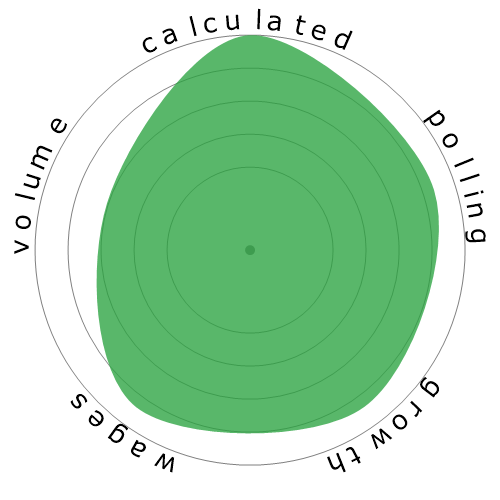
What does this snowflake show?
The Snowflake is a visual summary of the five badges: Automation Risk (calculated), Risk (polled), Growth, Wages and Volume. It gives you an instant snapshot of an occupations profile. The colour of the Snowflake relates to its size. The better the occupation scores in relation to others, the larger and greener the Snowflake becomes.
JOB SCORE
9.1/10
What's this?
Job Score (higher is better):

We rate jobs using four factors. These are:

- Chance of being automated
- Job growth
- Wages
- Volume of available positions

These are some key things to think about when job hunting.

Risk & user votes

Calculated automation risk

10% (Minimal Risk)

Minimal Risk (0-20%): This occupation appears difficult to replace end-to-end with current or near-future automation, including AI software and robotics. Roles in this range usually depend on human judgement, creativity, care, leadership, specialist expertise, or adapting to messy real-world situations. AI and machines may still change parts of the work, but the occupation is likely to remain a distinct human role.

More information on what this score is, and how it is calculated is available here.

Human strengths important in this job

These are human abilities and work contexts that are important in this occupation. They may help explain why parts of the role are harder to replace end-to-end, but they are not the only inputs into the automation score.

Assisting and caring for others

Very important
Why this matters
Provide hands-on help, emotional support, or personal care to people—work that depends on empathy, trust, and responding to individual needs in the moment.
Jobs that also use this strength

Working directly with the public

Very important
Why this matters
The job involves face-to-face interaction with customers, clients, or guests—answering questions, handling requests, and managing service situations in real time. Roles with frequent public interaction are harder to replace end-to-end because they rely on trust, communication, and adapting to unpredictable human needs.
Jobs that also use this strength

Decision-making and problem solving

Very important
Why this matters
Analyze information, weigh tradeoffs, and choose the best solution—especially when situations are ambiguous, high-stakes, or have real-world consequences.
Jobs that also use this strength

Psychology knowledge

Very important
Why this matters
Understanding human behavior, motivation, and individual differences to assess needs, respond appropriately, and support behavior change or mental health.
Jobs that also use this strength

Active learning

Very important
Why this matters
Keeps learning from new information and applying it to make better decisions now and in the future, especially when situations change.
Jobs that also use this strength
Show 6 more strengths

Thinking creatively

Quite important
Why this matters
Coming up with original ideas and designs—creating new concepts, products, systems, or artistic work. This kind of open-ended invention and taste-based judgment is harder to automate end-to-end than routine, rule-based tasks.
Jobs that also use this strength

Persuasion

Quite important
Why this matters
Influencing people to change their minds or behavior through conversation, trust, and negotiation.
Jobs that also use this strength

Coordinating others’ work

Quite important
Why this matters
Bringing people together, assigning tasks, and keeping a group aligned so work gets done.
Jobs that also use this strength

Consulting and advising others

Quite important
Why this matters
Provide guidance and expert advice to managers or teams on technical, system, or process decisions—explaining options, tradeoffs, and recommended actions.
Jobs that also use this strength

Operations analysis

Quite important
Why this matters
Figure out what people need and what a product must do, then translate those requirements into a workable design.
Jobs that also use this strength

Education and training expertise

Quite important
Why this matters
Designing and delivering instruction—adapting lessons to different learners and measuring whether training actually works.
Jobs that also use this strength

What users think

Based on 299 votes

29% chance of full automation within the next two decades

Our visitors have voted there's a low chance this occupation will be automated. This assessment is further supported by the calculated automation risk level, which estimates 10% chance of automation.

What do you think the risk of automation is?

What is the likelihood that Nurse Practitioners will be replaced by robots or artificial intelligence within the next 20 years?

Sentiment

Based on user votes over time

View sentiment trend

How opinions have changed over time

Pay & outlook

Wages

Very high paid relative to other professions

In 2024, the median annual wage for Nurse Practitioners was $129,210 ($62 per hour).

The median annual wage for Nurse Practitioners was 161.0% higher than the national median annual wage, which stood at $49,500.

View wage trend

Wages over time

* Data from the Bureau of Labor Statistics

Growth

Very fast growth relative to other professions

The number of 'Nurse Practitioners' job openings is expected to rise 40.1% by 2034

View employment trend

Total employment, and estimated job openings

* Data from the Bureau of Labor Statistics for the period between 2023 and 2033
Updated projections are due 09-2025.

Volume

Significantly greater range of job opportunities compared to other professions

As of 2024 there were 307,390 people employed as 'Nurse Practitioners' within the United States.

This represents around 0.20% of the employed workforce across the country

Put another way, around 1 in 501 people are employed as 'Nurse Practitioners'.

People also viewed

Computer Programmers Lawyers Web Developers Actors Graphic Designers

What people are saying (13)

Leave a comment
jeff
10 Aug 2023 02:36
empathy cannot be automated.
Aubrie
09 Dec 2025 18:14
I think that a nurse practitioner is important for human communication. A robot can find the diagnosis and can give the treatment, but a human is able to relate to their patient and help them through the struggle based on their diagnosis. Would you prefer to have a robot tell you you have cancer and are going to die, with no empathy or emotion, or another human who may be able to relate and give such heavy news in a way that makes it a little easier for you? I, honestly, would prefer the human.
Marty (No chance)
30 Jan 2023 14:33
There's no profession where a robot makes less sense than this. No chance.
Alex
12 Jul 2025 05:20
Nurses actually spread disease and increase transmission. Robots aren't breathing on patients.
Duc Long (No chance)
02 Apr 2025 13:40
A major concern is the loss of human connection in patient care. While AI can analyze medical data efficiently, it cannot replicate the empathy and trust-building that NPs provide, which is critical for patient engagement and adherence to treatment.
JIm
12 Jul 2025 05:17
Did you forget the COVID era? Where you couldn't touch your dying loved one? It was extremely cruel and terrible for all involved.
David (Uncertain)
15 Jan 2024 06:15
Embodiment and robotic advances will be key and I’m unsure if that will be wide spread within 20 years. The knowledge, problem solving and communication skills will be much easier to develop within that time.
Vince (No chance)
23 Aug 2023 16:48
Because of the individual nuances of each patient. We just don't treat the patients diagnosis we have to navigate what is best and what is second best for the patient. Most patients do not give all the information and do not follow what is required of them. So a robot will not be able to give a best care plan depending on each patients situation.
Aditya (Highly likely)
22 Sep 2024 21:40
Nurse practitioners will not be replaced by automation but rather by doctors as more doctors are being produced and immigrated leading to doctors having to work for lower wages and nurse practitioners being obsolete.
Jim
29 Jun 2025 01:55
Local doctor's office -> the doctor is always busy. The nurse practitioner has maybe 25% of overall patients.
Ash
04 Dec 2025 22:08
Wow—I’d love to work in your clinic! Maybe psych is different, but every single provider be it MD, PA, or NP is busy. All. The. Time.
Alexis
06 Jul 2024 15:58
Nurse practitioners have less training and expertise than MD/DO (100% acceptance rate, easy classes, no residency) , which cause them to be far more algorithmic in their assessments and plans. Their mid-level knowledge is easily replaced by a chatbot who could hear laundry lists of complaints
Ash
04 Dec 2025 22:12
I hear you on the training aspect. However, while I can’t speak for other specialties, the rest of your sentiment is categorically inaccurate when it comes to psych. NPs and PAs tend to bring far more to the table in terms of life experience, which is a critical asset in psych when a significant portion of the job is human connection. Like I said, I’ll give you the training gap, but a physician often doesn’t compare to the ability APPs have to empathize and relate to their mental health patients, and our patients feel it. That ability is irreplaceable be it by a machine or a psychiatrist.

Leave a reply about this occupation
0/8000

Job description

Diagnose and treat acute, episodic, or chronic illness, independently or as part of a healthcare team. May focus on health promotion and disease prevention. May order, perform, or interpret diagnostic tests such as lab work and x rays. May prescribe medication. Must be registered nurses who have specialized graduate education.

O*NET-SOC code: 29-1171.00