Alternative careers
Related career paths that build on similar skills and experience
Why it fits
Transfers stormwater, watershed, land-use impacts, permits, public works coordination, maps, and data review.
Why it fits
Applies GIS maps, spatial data, zoning layers, land records, analysis, public plans, and technical documentation.
Why it fits
Uses spatial analysis, demographic patterns, land use, maps, field data, regional trends, and written findings.
Why it fits
Uses growth plans, climate goals, community impacts, metrics, policy recommendations, and stakeholder reporting.

Occupation snapshot
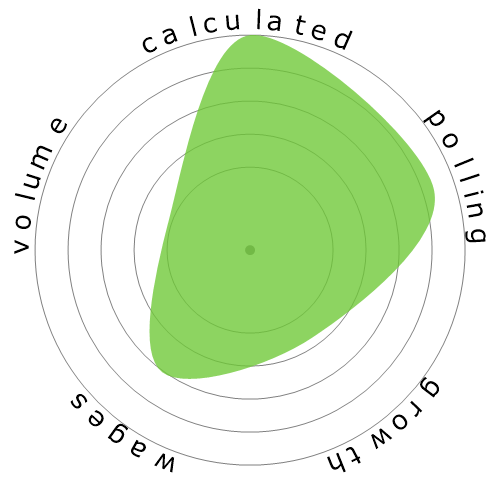
What does this snowflake show?
What's this?
We rate jobs using four factors. These are:
- Chance of being automated
- Job growth
- Wages
- Volume of available positions
These are some key things to think about when job hunting.
Risk & user votes
Calculated automation risk
Minimal Risk (0-20%): This occupation appears difficult to replace end-to-end with current or near-future automation, including AI software and robotics. Roles in this range usually depend on human judgement, creativity, care, leadership, specialist expertise, or adapting to messy real-world situations. AI and machines may still change parts of the work, but the occupation is likely to remain a distinct human role.
More information on what this score is, and how it is calculated is available here.
Human strengths important in this job
These are human abilities and work contexts that are important in this occupation. They may help explain why parts of the role are harder to replace end-to-end, but they are not the only inputs into the automation score.
Thinking creatively
Very importantWhy this matters
Decision-making and problem solving
Very importantWhy this matters
Coordinating others’ work
Very importantWhy this matters
Communicating with people outside the organization
Very importantWhy this matters
Developing objectives and strategies
Very importantWhy this matters
Show 5 more strengths
Social perceptiveness
Quite importantWhy this matters
Negotiation
Quite importantWhy this matters
Coaching and developing others
Quite importantWhy this matters
Active learning
Quite importantWhy this matters
Operations analysis
Quite importantWhy this matters
What users think
Based on 305 votes
Our visitors have voted there's a low chance this occupation will be automated. This assessment is further supported by the calculated automation risk level, which estimates 18% chance of automation.
What do you think the risk of automation is?
What is the likelihood that Urban and Regional Planners will be replaced by robots or artificial intelligence within the next 20 years?
Sentiment
Based on user votes over time
View sentiment trend
How opinions have changed over time
Pay & outlook
Wages
In 2024, the median annual wage for Urban and Regional Planners was ( per hour).
View wage trend
Wages over time
Growth
The number of 'Urban and Regional Planners' job openings is expected to rise 3.4% by 2034
View employment trend
Total employment, and estimated job openings
Updated projections are due 09-2025.
Volume
As of 2024 there were 43,040 people employed as 'Urban and Regional Planners' within the United States.
This represents around of the employed workforce across the country
Put another way, around 1 in people are employed as 'Urban and Regional Planners'.
People also viewed
Job description
Develop comprehensive plans and programs for use of land and physical facilities of jurisdictions, such as towns, cities, counties, and metropolitan areas.
O*NET-SOC code: 19-3051.00
What people are saying (15)
For instance, AI could potentially create a better city plan than a human, just by using real-time GIS data. This data could be acquired from CCTVs across the city using object recognition.
However, more detailed surveys are still required, and this job is centralized. People don't build their own cities, except in Cities Skylines. So, I think AI would assist city planners, but not fully replace them, at least not yet.
AI will allow for huge reductions in workload related to paperwork and processes that are slow and redundant. It will also improve inefficient in-person communication.
Anything can happen, and mistakes in urban planning using AI can be incredibly devastating. This can be likened to a highway construction fiasco with pseudoscience calculations and appeals to popularity or authority.
Reality can be very messy when AI can meet up, made even worse by human errors.
Reply to comment