Alternative careers
Related career paths that build on similar skills and experience
Why it fits
Uses advanced mathematics, modeling, proofs, and analytical problem solving with domain shift.
Why it fits
Transfers optimization, simulation, forecasting, and quantitative decision-support skills to operations problems.
Why it fits
Uses insurance and financial records, reserves, controls, documentation, and regulatory review knowledge.
Why it fits
Applies statistical modeling, sampling, uncertainty, validation, and interpretation skills outside insurance.

Occupation snapshot
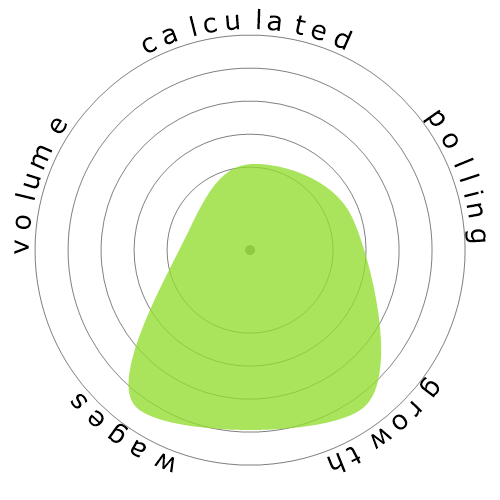
What does this snowflake show?
What's this?
We rate jobs using four factors. These are:
- Chance of being automated
- Job growth
- Wages
- Volume of available positions
These are some key things to think about when job hunting.
Risk & user votes
Calculated automation risk
Low Risk (21-40%): This occupation has a lower risk of full replacement by AI, software, or robotic systems. Some tasks may be automated or assisted, but the role usually still relies on human judgement, communication, responsibility, physical adaptability, or practical decision-making.
More information on what this score is, and how it is calculated is available here.
Human strengths important in this job
These are human abilities and work contexts that are important in this occupation. They may help explain why parts of the role are harder to replace end-to-end, but they are not the only inputs into the automation score.
Decision-making and problem solving
Very importantWhy this matters
Thinking creatively
Quite importantWhy this matters
Social perceptiveness
Quite importantWhy this matters
Coaching and developing others
Quite importantWhy this matters
Communicating with people outside the organization
Quite importantWhy this matters
Show 3 more strengths
Consulting and advising others
Quite importantWhy this matters
Active learning
Quite importantWhy this matters
Operations analysis
Quite importantWhy this matters
What users think
Based on 933 votes
Our visitors have voted they are unsure if this occupation will be automated. However, employees may be able to find reassurance in the automated risk level we have generated, which shows 21% chance of automation.
What do you think the risk of automation is?
What is the likelihood that Actuaries will be replaced by robots or artificial intelligence within the next 20 years?
Sentiment
Based on user votes over time
View sentiment trend
How opinions have changed over time
Pay & outlook
Wages
In 2024, the median annual wage for Actuaries was ( per hour).
View wage trend
Wages over time
Growth
The number of 'Actuaries' job openings is expected to rise 21.8% by 2034
View employment trend
Total employment, and estimated job openings
Updated projections are due 09-2025.
Volume
As of 2024 there were 28,340 people employed as 'Actuaries' within the United States.
This represents around of the employed workforce across the country
Put another way, around 1 in people are employed as 'Actuaries'.
People also viewed
Job description
Analyze statistical data, such as mortality, accident, sickness, disability, and retirement rates and construct probability tables to forecast risk and liability for payment of future benefits. May ascertain insurance rates required and cash reserves necessary to ensure payment of future benefits.
O*NET-SOC code: 15-2011.00
What people are saying (22)
If AI will be able to determine the outcome of lawsuits, actuaries might be at greater risk
Regarding your second paragraph, I see no reason why a sufficiently advanced AI couldn't update actuarial assumptions based on new data, and it seems possible that an advanced AGI might be able to actually develop better models than humans.
Reply to comment