Automation Risk
Each occupation shows a probability of automation. A higher score means machines and algorithms are more likely to take over the role in the future.
| SUMMARY |
42%
Moderate Risk
|
13%
Minimal Risk
|
37%
Low Risk
|
33%
Low Risk
|
30%
Low Risk
|
29%
Low Risk
|
| JOB SCORE | 4.8/10 | 7.6/10 | 5.2/10 | 3.7/10 | 5.8/10 | 5.4/10 |
| POLLING |
There hasn't been enough votes on this occupation yet
|
There hasn't been enough votes on this occupation yet
|
There hasn't been enough votes on this occupation yet
|
51%
(Moderate Risk,
Based on 82 votes)
|
46%
(Moderate Risk,
Based on 140 votes)
|
There hasn't been enough votes on this occupation yet
|
|
GROWTH
by year 2034
|
19.8%
|
13.8%
|
5.2%
|
2.9%
|
4.5%
|
5.2%
|
| WAGES |
$44,080
or $21.19 per hour
|
$98,340
or $47.27 per hour
|
$48,790
or $23.45 per hour
|
$46,560
or $22.38 per hour
|
$62,830
or $30.20 per hour
|
$48,790
or $23.45 per hour
|
|
VOLUME
as of 2024
|
76,520
|
152,280
|
174,060
|
79,690
|
113,890
|
174,060
|
| SNOWFLAKE |

|
|

|

|

|

|
| DESCRIPTION | Assist ophthalmologists by performing ophthalmic clinical functions. May administer eye exams, administer eye medications, and instruct the patient in care and use of corrective lenses. | Provide therapy to patients with visual impairments to improve their functioning in daily life activities. May train patients in activities such as computer use, communication skills, or home management skills. | Assist ophthalmologists by performing ophthalmic clinical functions and ophthalmic photography. Provide instruction and supervision to other ophthalmic personnel. Assist with minor surgical procedures, applying aseptic techniques and preparing instruments. May perform eye exams, administer eye medications, and instruct patients in care and use of corrective lenses. | Design, measure, fit, and adapt lenses and frames for client according to written optical prescription or specification. Assist client with inserting, removing, and caring for contact lenses. Assist client with selecting frames. Measure customer for size of eyeglasses and coordinate frames with facial and eye measurements and optical prescription. Prepare work order for optical laboratory containing instructions for grinding and mounting lenses in frames. Verify exactness of finished lens spectacles. Adjust frame and lens position to fit client. May shape or reshape frames. Includes contact lens opticians. | Assist in operations, under the supervision of surgeons, registered nurses, or other surgical personnel. May help set up operating room, prepare and transport patients for surgery, adjust lights and equipment, pass instruments and other supplies to surgeons and surgeons' assistants, hold retractors, cut sutures, and help count sponges, needles, supplies, and instruments. | Assist patients in obtaining services, understanding policies and making health care decisions. |
Curious how automation and AI could affect your career? Our comparison tool lets you view two or more jobs side by side, helping you quickly spot differences in risk level, pay, growth, and popularity. All of this is based on a mix of academic research, user polling, and official labour data.
Each occupation shows a probability of automation. A higher score means machines and algorithms are more likely to take over the role in the future.
A quick summary of how a job performs overall — factoring in wages, growth, volume, and automation risk. It’s a handy way to see the bigger picture at a glance.
Thousands of visitors cast their votes on how “automatable” each job feels. These community insights are shown alongside the calculated probabilities.
See how fast each occupation is projected to grow and what people earn on average. High wages don’t always mean high security — automation risk still matters.
Explore how many people currently work in each occupation and in which year the data was recorded. Popularity can affect how disruptive automation will be for the wider economy.
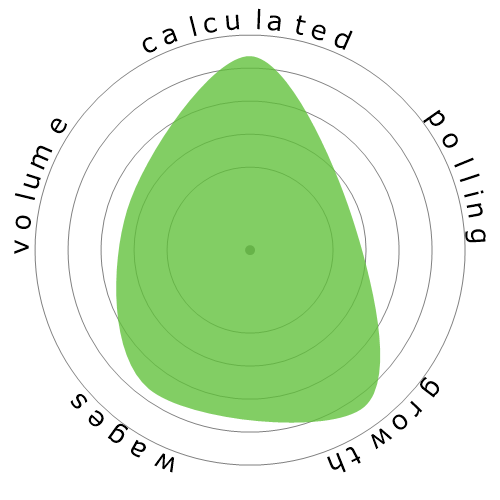
Each snowflake visualises the balance between automation risk, wages, growth, and job volume. Bigger and greener areas mean stronger performance in that dimension.
Use this comparison page to research careers, guide students, or simply explore the future of work. All data is regularly updated to keep the results relevant.