Manufacturing Engineers

Low Risk
Low High

Explore safer careers (1)

Lower estimated automation risk

Robotics Engineers
13% automation risk | Minimal Risk
Pays better
7.7 pts lower View career
Why it fits

Fits manufacturing engineers with automation exposure using tooling, sensors, controls, integration, testing, and production needs.

Alternative careers

Related career paths that build on similar skills and experience

Mechanical Engineers
21% automation risk | Low Risk
Similar risk View career
Why it fits

Uses machine design context, CAD, materials, tolerances, testing, failure analysis, and design-for-manufacturing constraints.

Industrial Production Managers
27% automation risk | Low Risk
Pays better
View career
Why it fits

Fits engineers moving into production schedules, staffing, throughput, safety, quality, budgets, and resource decisions.

Quality Control Systems Managers
22% automation risk | Low Risk
Pays better
View career
Why it fits

Uses quality systems, SOPs, audits, process capability, root-cause analysis, corrective actions, and production metrics.


Share your results with friends and family.

Occupation snapshot

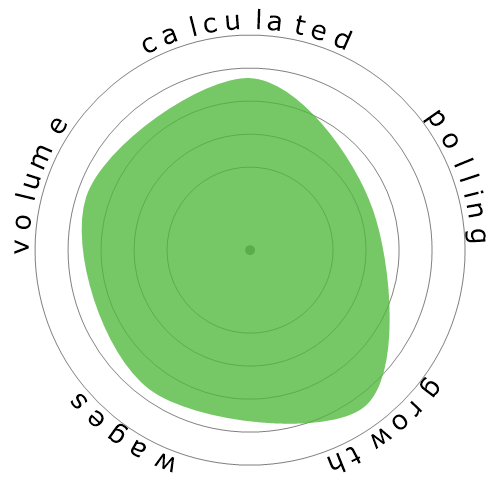
What does this snowflake show?
The Snowflake is a visual summary of the five badges: Automation Risk (calculated), Risk (polled), Growth, Wages and Volume. It gives you an instant snapshot of an occupations profile. The colour of the Snowflake relates to its size. The better the occupation scores in relation to others, the larger and greener the Snowflake becomes.
JOB SCORE
8.0/10
What's this?
Job Score (higher is better):

We rate jobs using four factors. These are:

- Chance of being automated
- Job growth
- Wages
- Volume of available positions

These are some key things to think about when job hunting.

Risk & user votes

Calculated automation risk

20% (Low Risk)

Low Risk (21-40%): This occupation has a lower risk of full replacement by AI, software, or robotic systems. Some tasks may be automated or assisted, but the role usually still relies on human judgement, communication, responsibility, physical adaptability, or practical decision-making.

More information on what this score is, and how it is calculated is available here.

Human strengths important in this job

These are human abilities and work contexts that are important in this occupation. They may help explain why parts of the role are harder to replace end-to-end, but they are not the only inputs into the automation score.

Decision-making and problem solving

Very important
Why this matters
Analyze information, weigh tradeoffs, and choose the best solution—especially when situations are ambiguous, high-stakes, or have real-world consequences.
Jobs that also use this strength

Thinking creatively

Quite important
Why this matters
Coming up with original ideas and designs—creating new concepts, products, systems, or artistic work. This kind of open-ended invention and taste-based judgment is harder to automate end-to-end than routine, rule-based tasks.
Jobs that also use this strength

Persuasion

Quite important
Why this matters
Influencing people to change their minds or behavior through conversation, trust, and negotiation.
Jobs that also use this strength

Social perceptiveness

Quite important
Why this matters
Noticing others’ emotions and reactions in the moment and adjusting what you say or do based on why they’re responding that way.
Jobs that also use this strength

Coordinating others’ work

Quite important
Why this matters
Bringing people together, assigning tasks, and keeping a group aligned so work gets done.
Jobs that also use this strength
Show 4 more strengths

Consulting and advising others

Quite important
Why this matters
Provide guidance and expert advice to managers or teams on technical, system, or process decisions—explaining options, tradeoffs, and recommended actions.
Jobs that also use this strength

Active learning

Quite important
Why this matters
Keeps learning from new information and applying it to make better decisions now and in the future, especially when situations change.
Jobs that also use this strength

Operations analysis

Quite important
Why this matters
Figure out what people need and what a product must do, then translate those requirements into a workable design.
Jobs that also use this strength

Education and training expertise

Quite important
Why this matters
Designing and delivering instruction—adapting lessons to different learners and measuring whether training actually works.
Jobs that also use this strength

What users think

Based on 90 votes

38% chance of full automation within the next two decades

Our visitors have voted there's a low chance this occupation will be automated. This assessment is further supported by the calculated automation risk level, which estimates 20% chance of automation.

What do you think the risk of automation is?

What is the likelihood that Manufacturing Engineers will be replaced by robots or artificial intelligence within the next 20 years?

Sentiment

Based on user votes over time

View sentiment trend

How opinions have changed over time

Pay & outlook

Wages

Very high paid relative to other professions

In 2024, the median annual wage for Industrial Engineers was $101,140 ($49 per hour).

The median annual wage for Industrial Engineers was 104.3% higher than the national median annual wage, which stood at $49,500.

* Data from the Bureau of Labor Statistics

Growth

Very fast growth relative to other professions

The number of 'Industrial Engineers' job openings is expected to rise 11.0% by 2034

* Data from the Bureau of Labor Statistics for the period between 2023 and 2033
Updated projections are due 09-2025.

Volume

Significantly greater range of job opportunities compared to other professions

As of 2024 there were 350,230 people employed as 'Industrial Engineers' within the United States.

This represents around 0.23% of the employed workforce across the country

Put another way, around 1 in 440 people are employed as 'Industrial Engineers'.

People also viewed

Mechanical Engineers Computer Programmers Electrical Engineers Lawyers Industrial Engineers

What people are saying (2)

Veska
04 Apr 2025 20:29
I don't think ai has the creativity and outside the box thinking a human has because of a lack of emotions and mentality
Cale Eakins (Low)
26 Mar 2025 18:31
Manufacturing engineers are typically responsible for integrating automation into production processes and optimizing operations. Instead of replacing their roles, AI serves as a tool that enhances their ability to monitor and respond to trends. They often take on responsibilities similar to those of plant managers, making it unlikely that this role will be fully automated.

Leave a reply about this occupation
0/8000

Job description

Design, integrate, or improve manufacturing systems or related processes. May work with commercial or industrial designers to refine product designs to increase producibility and decrease costs.

O*NET-SOC code: 17-2112.03