Dancers

Low Risk
Low High

Explore safer careers (5)

Lower estimated automation risk

Choreographers
10% automation risk | Minimal Risk
13.1 pts lower View career
Why it fits

Directly reuses dance technique, movement design, rehearsal direction, timing, performers, staging, and critique.

Recreation Workers
9% automation risk | Minimal Risk
More jobs
14 pts lower View career
Why it fits

Uses activity leadership, group energy, demonstrations, safety awareness, participant encouragement, and event support.

Art, Drama, and Music Teachers, Postsecondary
10% automation risk | Minimal Risk
More jobs
13.5 pts lower View career
Why it fits

Fits experienced dancers with teaching credentials using technique, critique, performance history, rehearsal methods, and curriculum planning.

Agents and Business Managers of Artists, Performers, and Athletes
17% automation risk | Minimal Risk
Higher growth More jobs
5.9 pts lower View career
Why it fits

Fits dancers with industry networks using performer needs, auditions, scheduling, promotion, contracts context, and negotiation support.

Producers and Directors
15% automation risk | Minimal Risk
More jobs
8.3 pts lower View career
Why it fits

Applies staging, rehearsal timing, performer coordination, show concepts, audience awareness, and production discipline.


Share your results with friends and family.

Occupation snapshot

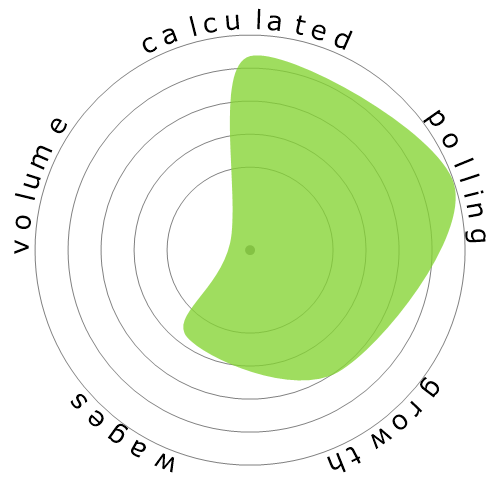
What does this snowflake show?
The Snowflake is a visual summary of the five badges: Automation Risk (calculated), Risk (polled), Growth, Wages and Volume. It gives you an instant snapshot of an occupations profile. The colour of the Snowflake relates to its size. The better the occupation scores in relation to others, the larger and greener the Snowflake becomes.
JOB SCORE
6.8/10
What's this?
Job Score (higher is better):

We rate jobs using four factors. These are:

- Chance of being automated
- Job growth
- Wages
- Volume of available positions

These are some key things to think about when job hunting.

Risk & user votes

Calculated automation risk

23% (Low Risk)

Low Risk (21-40%): This occupation has a lower risk of full replacement by AI, software, or robotic systems. Some tasks may be automated or assisted, but the role usually still relies on human judgement, communication, responsibility, physical adaptability, or practical decision-making.

More information on what this score is, and how it is calculated is available here.

Human strengths important in this job

These are human abilities and work contexts that are important in this occupation. They may help explain why parts of the role are harder to replace end-to-end, but they are not the only inputs into the automation score.

Working directly with the public

Quite important
Why this matters
The job involves face-to-face interaction with customers, clients, or guests—answering questions, handling requests, and managing service situations in real time. Roles with frequent public interaction are harder to replace end-to-end because they rely on trust, communication, and adapting to unpredictable human needs.
Jobs that also use this strength

Thinking creatively

Quite important
Why this matters
Coming up with original ideas and designs—creating new concepts, products, systems, or artistic work. This kind of open-ended invention and taste-based judgment is harder to automate end-to-end than routine, rule-based tasks.
Jobs that also use this strength

What users think

Based on 294 votes

16.2% chance of full automation within the next two decades

Our visitors have voted there's a minimal chance this occupation will be automated. This assessment is further supported by the calculated automation risk level, which estimates 23% chance of automation.

What do you think the risk of automation is?

What is the likelihood that Dancers will be replaced by robots or artificial intelligence within the next 20 years?

Sentiment

Based on user votes over time

View sentiment trend

How opinions have changed over time

Pay & outlook

Growth

Fast growth relative to other professions

The number of 'Dancers' job openings is expected to rise 4.5% by 2034

View employment trend

Total employment, and estimated job openings

* Data from the Bureau of Labor Statistics for the period between 2023 and 2033
Updated projections are due 09-2025.

Volume

Significantly lower range of job opportunities compared to other professions

As of 2024 there were 9,060 people employed as 'Dancers' within the United States.

This represents around < 0.001% of the employed workforce across the country

Put another way, around 1 in 17 thousand people are employed as 'Dancers'.

People also viewed

Actors Lawyers Graphic Designers Computer Programmers Musicians and Singers

What people are saying (6)

Leave a comment
Cory (No chance)
01 May 2026 19:35
Because they have no way of being flexible and having emotions and dancing as beautifully, emotionally and ethereal as a human.
Oma Yalu Martinez Machaen (No chance)
28 Feb 2025 14:31
Robots will never be able to convey a feeling.
Aila
10 Jul 2024 03:23
No. There needs to be a lot of expression in ballet, and robots can’t do that. Robots won’t have the amount of flexibility for dance either.
Willy Wonka (No chance)
07 May 2024 03:28
Too much creativity (for choreography and interpretation of movement) and too much dexterity and complex movement, specifically requiring a flexible, yet strong build which most robots don't have.
Roddrick
15 Mar 2021 15:09
I'm just saying, robot dancers don't sound too bad. And I won't get in trouble for harassing them. What a dream.
M (Low)
23 Feb 2021 15:50
Because who would want to watch a ballet in a theatre by robots!

Leave a reply about this occupation
0/8000

Job description

Perform dances. May perform on stage, for broadcasting, or for video recording.

O*NET-SOC code: 27-2031.00