Chiropractors

Minimal Risk
Low High

Alternative careers

Related career paths that build on similar skills and experience

Health Education Specialists
20% automation risk | Minimal Risk
More jobs
View career
Why it fits

Uses prevention counseling, patient education, wellness behavior, materials, community outreach, and program evaluation.

Health Specialties Teachers, Postsecondary
10% automation risk | Minimal Risk
Pays better Higher growth
2.2 pts lower View career
Why it fits

Directly reuses musculoskeletal expertise, patient cases, clinical reasoning, anatomy instruction, and supervised practice.

Medical and Health Services Managers
10% automation risk | Minimal Risk
Pays better Higher growth
1.7 pts lower View career
Why it fits

Fits practice owners moving into clinic operations, staffing, compliance, scheduling, billing, and care quality.

Physical Therapist Assistants
18% automation risk | Minimal Risk
Higher growth More jobs
View career
Why it fits

Uses musculoskeletal care, exercises, treatment plans, patient observation, progress documentation, and hands-on therapy.


Share your results with friends and family.

Occupation snapshot

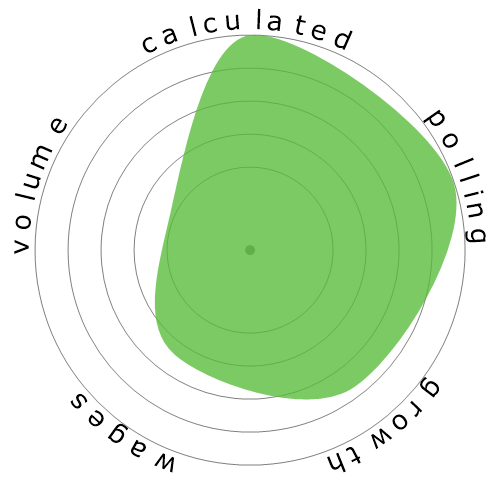
What does this snowflake show?
The Snowflake is a visual summary of the five badges: Automation Risk (calculated), Risk (polled), Growth, Wages and Volume. It gives you an instant snapshot of an occupations profile. The colour of the Snowflake relates to its size. The better the occupation scores in relation to others, the larger and greener the Snowflake becomes.
JOB SCORE
8.3/10
What's this?
Job Score (higher is better):

We rate jobs using four factors. These are:

- Chance of being automated
- Job growth
- Wages
- Volume of available positions

These are some key things to think about when job hunting.

Risk & user votes

Calculated automation risk

12% (Minimal Risk)

Minimal Risk (0-20%): This occupation appears difficult to replace end-to-end with current or near-future automation, including AI software and robotics. Roles in this range usually depend on human judgement, creativity, care, leadership, specialist expertise, or adapting to messy real-world situations. AI and machines may still change parts of the work, but the occupation is likely to remain a distinct human role.

More information on what this score is, and how it is calculated is available here.

Human strengths important in this job

These are human abilities and work contexts that are important in this occupation. They may help explain why parts of the role are harder to replace end-to-end, but they are not the only inputs into the automation score.

Assisting and caring for others

Very important
Why this matters
Provide hands-on help, emotional support, or personal care to people—work that depends on empathy, trust, and responding to individual needs in the moment.
Jobs that also use this strength

Working directly with the public

Very important
Why this matters
The job involves face-to-face interaction with customers, clients, or guests—answering questions, handling requests, and managing service situations in real time. Roles with frequent public interaction are harder to replace end-to-end because they rely on trust, communication, and adapting to unpredictable human needs.
Jobs that also use this strength

Decision-making and problem solving

Very important
Why this matters
Analyze information, weigh tradeoffs, and choose the best solution—especially when situations are ambiguous, high-stakes, or have real-world consequences.
Jobs that also use this strength

Thinking creatively

Quite important
Why this matters
Coming up with original ideas and designs—creating new concepts, products, systems, or artistic work. This kind of open-ended invention and taste-based judgment is harder to automate end-to-end than routine, rule-based tasks.
Jobs that also use this strength

Persuasion

Quite important
Why this matters
Influencing people to change their minds or behavior through conversation, trust, and negotiation.
Jobs that also use this strength
Show 5 more strengths

Coordinating others’ work

Quite important
Why this matters
Bringing people together, assigning tasks, and keeping a group aligned so work gets done.
Jobs that also use this strength

Developing objectives and strategies

Quite important
Why this matters
Sets long-term goals and chooses strategies and actions to reach them, weighing tradeoffs and adapting plans as conditions change.
Jobs that also use this strength

Psychology knowledge

Quite important
Why this matters
Understanding human behavior, motivation, and individual differences to assess needs, respond appropriately, and support behavior change or mental health.
Jobs that also use this strength

Active learning

Quite important
Why this matters
Keeps learning from new information and applying it to make better decisions now and in the future, especially when situations change.
Jobs that also use this strength

Education and training expertise

Quite important
Why this matters
Designing and delivering instruction—adapting lessons to different learners and measuring whether training actually works.
Jobs that also use this strength

What users think

Based on 99 votes

22% chance of full automation within the next two decades

Our visitors have voted there's a low chance this occupation will be automated. This assessment is further supported by the calculated automation risk level, which estimates 12% chance of automation.

What do you think the risk of automation is?

What is the likelihood that Chiropractors will be replaced by robots or artificial intelligence within the next 20 years?

Sentiment

Based on user votes over time

View sentiment trend

How opinions have changed over time

Pay & outlook

Wages

High paid relative to other professions

In 2024, the median annual wage for Chiropractors was $79,000 ($38 per hour).

The median annual wage for Chiropractors was 59.6% higher than the national median annual wage, which stood at $49,500.

View wage trend

Wages over time

* Data from the Bureau of Labor Statistics

Growth

Very fast growth relative to other professions

The number of 'Chiropractors' job openings is expected to rise 9.5% by 2034

View employment trend

Total employment, and estimated job openings

* Data from the Bureau of Labor Statistics for the period between 2023 and 2033
Updated projections are due 09-2025.

Volume

Moderate range of job opportunities compared to other professions

As of 2024 there were 37,630 people employed as 'Chiropractors' within the United States.

This represents around < 0.001% of the employed workforce across the country

Put another way, around 1 in 4 thousand people are employed as 'Chiropractors'.

People also viewed

Lawyers Actors Computer Programmers Graphic Designers Pharmacists

What people are saying (4)

Kimberly Junemann (No chance)
18 Jan 2025 23:11
I am a chiropractor and so I am grateful for what I contribute intellectually, emotionally and physically to my patients. There is also an important, though less talked about intuitive component. I will never be convinced AI would be capable of this integration.
adrian (No chance)
12 May 2023 03:42
job is far too dextrous
Raj Vekaria (No chance)
17 Oct 2022 10:07
i wouldn't trust a robot chiropractor cracking my bones
N (Small Chance)
28 May 2021 16:41
No, Chiropractors will not be replaced by AI. It's just impossible, it may be possible in the next 70 years or so, but not in 30 years. Chiropractors have the special ability to use force. Well, most robots are unable to do so, and chiropractors have to give advice, they also have to manipulate your body parts to get them into position. So, for me, its a bit hard to imagine that.

Leave a reply about this occupation
0/8000

Job description

Assess, treat, and care for patients by manipulation of spine and musculoskeletal system. May provide spinal adjustment or address sacral or pelvic misalignment.

O*NET-SOC code: 29-1011.00