Alternative careers
Related career paths that build on similar skills and experience
Why it fits
Fits nano-biomedical work using devices, biomaterials, testing, design controls, and clinical translation.
Why it fits
Uses production scale-up, process controls, quality metrics, equipment, validation, and manufacturing documentation.
Why it fits
Strong engineering move using nanoscale materials, properties, characterization, design, manufacturing, and testing.
Why it fits
Applies molecular composition, characterization, experiments, structure-property analysis, and technical reporting.

Occupation snapshot
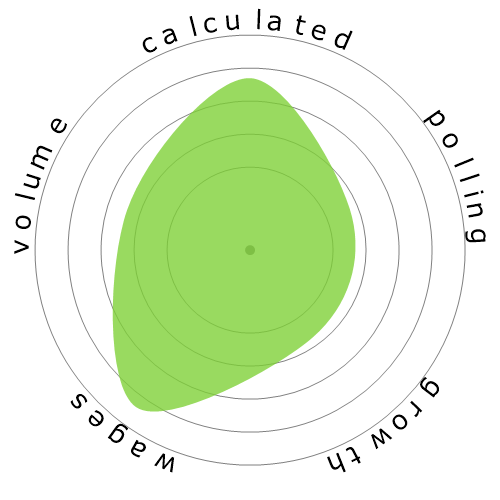
What does this snowflake show?
What's this?
We rate jobs using four factors. These are:
- Chance of being automated
- Job growth
- Wages
- Volume of available positions
These are some key things to think about when job hunting.
Risk & user votes
Calculated automation risk
Minimal Risk (0-20%): This occupation appears difficult to replace end-to-end with current or near-future automation, including AI software and robotics. Roles in this range usually depend on human judgement, creativity, care, leadership, specialist expertise, or adapting to messy real-world situations. AI and machines may still change parts of the work, but the occupation is likely to remain a distinct human role.
More information on what this score is, and how it is calculated is available here.
Human strengths important in this job
These are human abilities and work contexts that are important in this occupation. They may help explain why parts of the role are harder to replace end-to-end, but they are not the only inputs into the automation score.
Thinking creatively
Very importantWhy this matters
Decision-making and problem solving
Very importantWhy this matters
Social perceptiveness
Quite importantWhy this matters
Persuasion
Quite importantWhy this matters
Coaching and developing others
Quite importantWhy this matters
Show 4 more strengths
Communicating with people outside the organization
Quite importantWhy this matters
Consulting and advising others
Quite importantWhy this matters
Active learning
Quite importantWhy this matters
Operations analysis
Quite importantWhy this matters
What users think
Based on 12 votes
What do you think the risk of automation is?
What is the likelihood that Nanosystems Engineers will be replaced by robots or artificial intelligence within the next 20 years?
Pay & outlook
Wages
In 2024, the median annual wage for Engineers, All Other was ( per hour).
Growth
The number of 'Engineers, All Other' job openings is expected to rise 2.1% by 2034
Updated projections are due 09-2025.
Volume
As of 2024 there were 150,750 people employed as 'Engineers, All Other' within the United States.
This represents around of the employed workforce across the country
Put another way, around 1 in people are employed as 'Engineers, All Other'.
People also viewed
Job description
Design, develop, or supervise the production of materials, devices, or systems of unique molecular or macromolecular composition, applying principles of nanoscale physics and electrical, chemical, or biological engineering.
O*NET-SOC code: 17-2199.09
What people are saying (0)
Reply to comment